
Nature, Scope, Characteristics and Objects of Law of Torts
Topic Overview
Nature & Scope
Characteristics, Objectives, and Basic Core Principles
Key Distinctions
Differences Between Tort, Contract, and Crime
Nature of a Tort
- Civil or Private Wrong: A tort is a civil or private wrong that involves the infringement of a private right belonging to an individual.
- Handled in Civil Courts: Because it is a private wrong, the person whose rights are infringed can take legal action and seek damages directly in a civil court.
- Not Codified: Unlike criminal law or specific statutory acts, the law of torts is not codified into a neat book of statutes.
- Roots in Common Law: Instead of legislative codes, tort law finds its roots, principles, and rules in centuries of judge-made Common Law decisions.
- Prevention of Loss: The core focus and purpose behind tort law is the prevention and mitigation of loss for an injured party
Key Characteristics of a Tort
A. Right in Rem (Right Against the World)
One of the defining features of a tort is that it involves the violation of a Right in Rem. This means you possess a right that is enforceable against the entire world, not just a specific person. Because the law protects your safety and property from everyone universally, the question of being a stranger does not arise—anyone who breaks that universal rule can be held liable.
B. Rights and Duties Imposed by Law
Unlike a contract where parties voluntarily sit down and agree to duties, the duties in tort are imposed strictly by law. You do not get a choice to opt out; the law decides how you must behave to avoid harming others.
C. Harm Without Consent
In tort, consent is generally not taken, and it does not play a foundational role in establishing the duty. A tort involves harm inflicted without the victim's consent to that injury, which distinguishes it entirely from consensual agreements.
D. The Role of Motive and Damages
Liability Irrespective of Motive: Generally, if an activity is deemed wrong by the law and it causes actual damage, the court will hold the wrongdoer liable regardless of their underlying motive (even if they didn't mean to cause harm).
Extra Damages for Malicious Motive: However, if the person who suffered harm can actively prove a bad or malicious motive, they can use that to ask the court for extra (punitive/exemplary) damages beyond basic compensation.
Scope of Tort
- Tort law covers a broad range of civil wrongs that result in harm or injury to individual or their property.
- It covers various areas such as negligence, nuisance, trespass, defamation, liability.
- Scope of Tort include compensation for damages caused, establishing legal responsibility between individuals and entities.
Objective of Tort
- Provide relief to individuals who have suffered due to wrongful action of others.
- Aims to compensate the injured party.
- Seek to allocate responsibilities, define standard of conduct, promote sense of Justice by holding individual accountable for their action
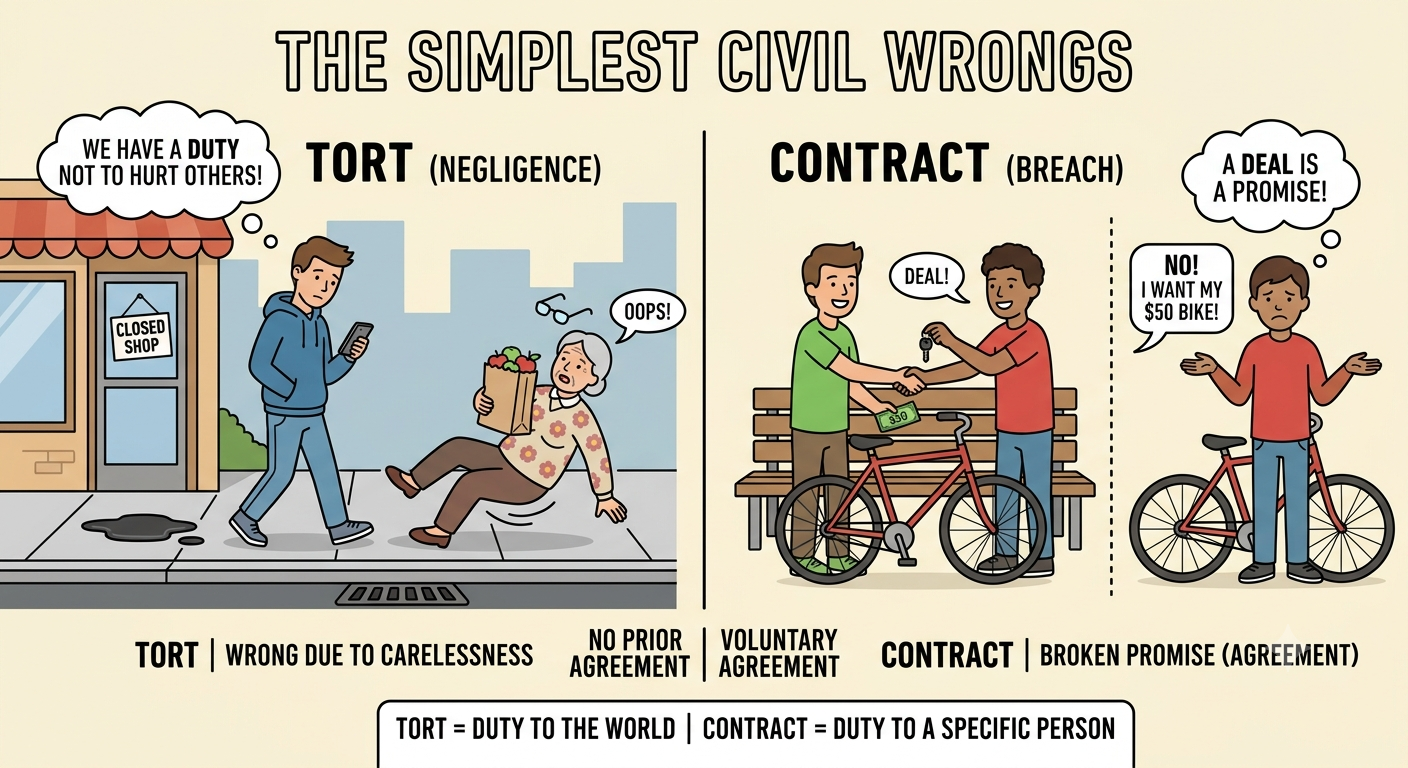
Distinction between Tort and Contract
| Basis | Tort | Crime |
|---|---|---|
| Consent | Consent is not taken in tort; it does not role in tort | Consent is essential element ‘free consent” no free consent the contract is considered void |
| Privity | Harm without consent. So the question of stranger does not arrive. | In contrast, injured to contract cannot sue for breach of contract |
| Nature of right violated. | In case of tort right in Rem is violated, right in Rem is right against the world | Rights in persona is violated in terms of contract. Right in personam means right in personal. |
| Nature of right and duties. | Right imposed by law. | Decided an imposed by party to contract |
| As to motive | Court held if activity was wrong and cause of damage. If yes, then liable exceptional to motive. | Law of contract does not consider motive if contract is breached person will be liable |
| Nature of relief/Remedy | If person suffered can take action and ask for damage if motive proved. Can ask for Extra damages | Claim of damage or demand of specific performance, according to contact. |
| Codification. | Not codified | Codified under Indian Contract Act 1857. |
| Aim | Prevention of loss | To make sure contract are performed. |
Distinction between tort and crime
| Basis | Tort | Crime |
|---|---|---|
| Definition | Civil or private wrong, it is infringement of private right. | Criminal wrong or public wrong infringement of public right. |
| Procedure applied. | The person whose rights are infringed can take action and seek damages in civil court. | In crime procedure are initiated by state |
| Courts | Tort cases are handled in civil court. | criminal cases are handled in criminal court. |
| Rights violated | Right in Rem (Right against world) is violated | Right in Rem (Right against world) is violated |
| Codification | It is Not codified | It is codified under CRPC and IPC |
| Historical background | Roots in common law. | Later development of law of crime. |